


How to Choose an Oil Analyzer?
07-08-2026
Routine oil analysis is essential for predictive maintenance, equipment reliability, and petroleum quality control. By monitoring the elemental composition of lubricating oil and crude oil, manufacturers can detect equipment wear, evaluate oil quality, and improve maintenance planning.
Among various analytical technologies, X-ray Fluorescence (XRF) is widely used for routine oil analysis because it delivers fast, non-destructive elemental analysis with minimal sample preparation.
This guide explains the most common oil analysis applications and helps you choose the right analyzer for routine elemental testing.
Common Oil Analysis Applications
Oil analyzers are used in different industries depending on the testing objective.
| Application | Typical Elements | Primary Purpose |
| Lubricating Oil Analysis | Fe, Cu, Al and other wear metals | Monitor equipment wear and lubricant condition |
| Crude Oil Analysis | Ni, V, Fe, S, Cl and other elements | Petroleum quality control and refining optimization |
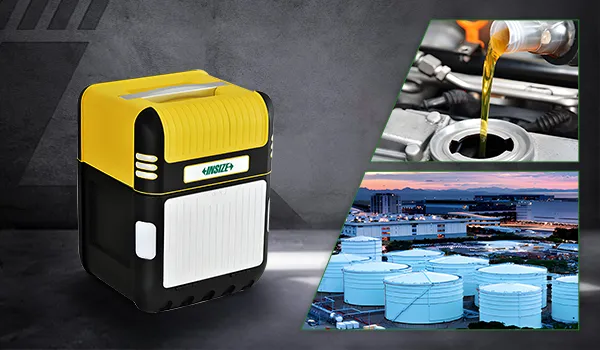
When Should You Use an Oil Analyzer?
An oil analyzer is recommended when you need to:
● Monitor wear metals in lubricating oil
● Evaluate the elemental composition of crude oil
● Measure sulfur (S) or chlorine (Cl) in petroleum products
● Support predictive maintenance programs
● Improve equipment reliability and reduce maintenance costs
Selecting the right analyzer according to your testing application helps ensure accurate results and more efficient maintenance planning.
Application 1. Lubricating Oil Analysis
Lubricating oil contains microscopic metal particles generated during equipment operation. As components wear over time, these particles increase in concentration and provide valuable information about machine condition.
Routine analysis of wear metals helps maintenance teams identify abnormal wear before equipment failures occur, enabling condition-based maintenance instead of reactive repairs.
Benefits
● Detect abnormal equipment wear at an early stage
● Support predictive maintenance programs
● Extend equipment service life
● Reduce unexpected downtime and maintenance costs
Typical wear metals include iron (Fe), copper (Cu), and aluminum (Al).
Application 2. Crude Oil Analysis
Crude oil analysis plays an important role in petroleum processing and quality control. Measuring elemental composition helps evaluate crude oil quality, optimize refining processes, and protect refining equipment.
XRF technology can rapidly determine both metallic and non-metallic elements in crude oil, providing valuable information for production and quality management.
Typical Applications
● Elemental composition analysis
● Refinery catalyst protection
● Contaminant detection
● Petroleum quality control
Benefits
● Analyze key elements such as nickel (Ni), vanadium (V), iron (Fe), sulfur (S), and chlorine (Cl)
● Evaluate the impact of metal contaminants on refining catalysts
● Improve consistency throughout petroleum processing
● Support quality assurance before refining
Recommended Solution: INSIZE XRF-Y Series Oil Analyzer
XRF technology is particularly suitable for routine oil analysis because it enables rapid, non-destructive, multi-element detection with minimal sample preparation. These advantages make it an efficient solution for both lubricant monitoring and crude oil analysis.
The INSIZE XRF-Y Series Oil Analyzer combines the advantages of XRF technology with efficient elemental analysis for both lubricating oil monitoring and petroleum quality control.
| Category | Description |
| Technology | X-ray Fluorescence (XRF) |
| Recommended Series | XRF-Y Series |
| Best For | Lubricating oil and crude oil analysis |
| Key Benefits | Fast analysis, non-destructive testing, minimal sample preparation, multi-element detection |
| Analysis Capability | Detects trace wear metal elements in oil |
| Additional Elements | Measures chlorine (Cl) and sulfur (S) in petroleum products |
| Typical Applications | Predictive maintenance, lubricant monitoring, petroleum quality control |
Final Thoughts
Choosing the right oil analyzer depends on whether your primary objective is monitoring equipment condition through lubricating oil analysis or evaluating petroleum quality through crude oil analysis.Whether you need to monitor wear metals in lubricating oil or analyze the elemental composition of crude oil, routine elemental analysis provides valuable information for predictive maintenance, quality control, and process optimization.
The INSIZE XRF-Y Series Oil Analyzer is designed for these routine inspection tasks, helping users detect trace wear metals as well as chlorine (Cl) and sulfur (S) in petroleum products. By selecting the right analyzer for your application, manufacturers can improve equipment reliability, optimize maintenance planning, and maintain consistent petroleum quality.